LTT Empowering Artificial Intelligence for Sustainability, Turkey 01-05.06.2026
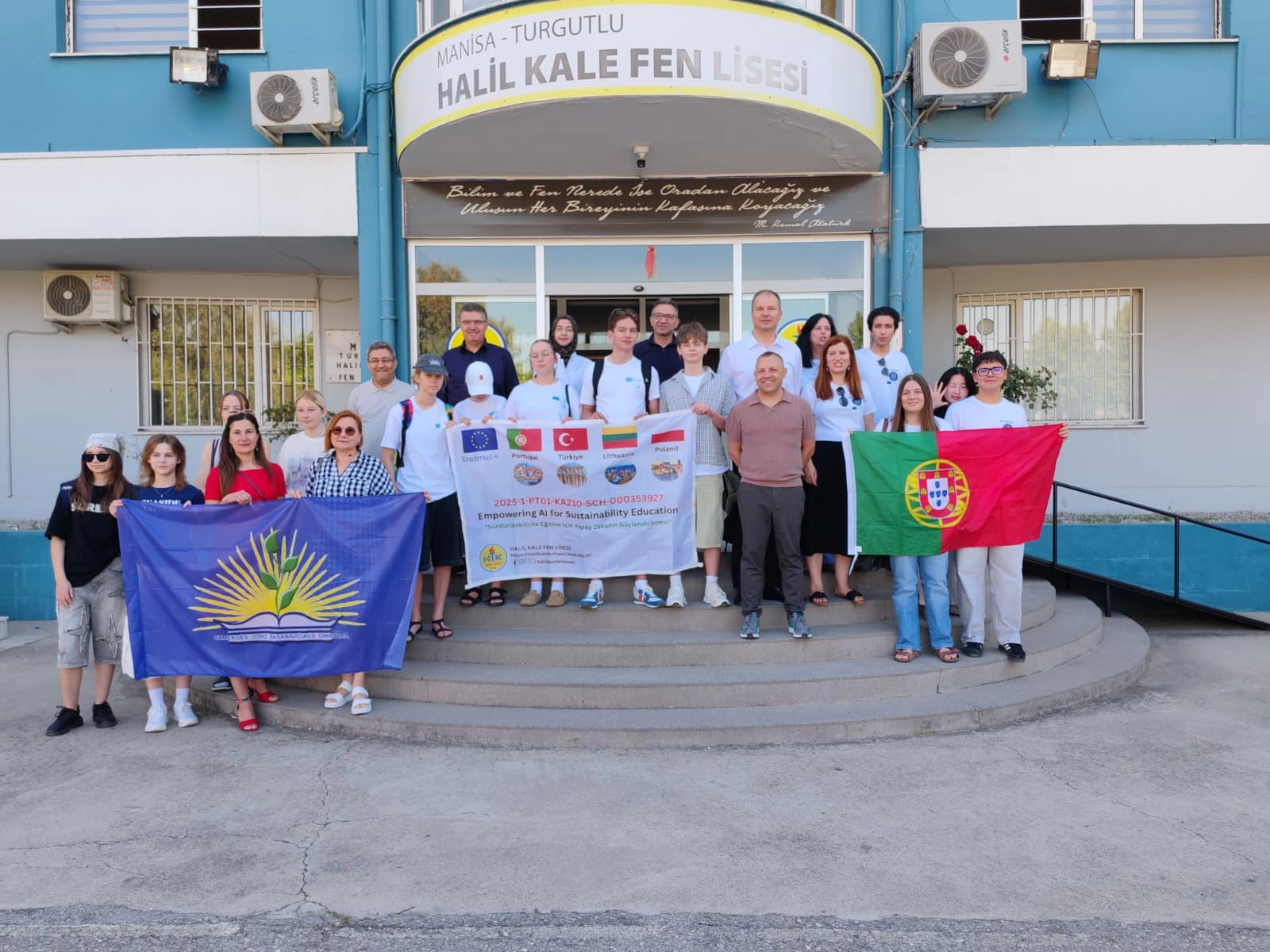
Within the framework of the Erasmus+ project EASE – Empowering AI for Sustainability Education, students participated in a four-day educational mobility focused on the use of artificial intelligence in achieving the United Nations Sustainable Development Goals (SDGs) – SDGs 11, 12, 13 and 16. The programme combined project-based learning, the development of digital competences, climate education, STEM activities and international cooperation.
Day 1 – Climate and Sustainable Communities
The first day began with an introduction to the EASE project, the objectives of the mobility and the selected Sustainable Development Goals, presented using Prezi.
Students then took part in interactive workshops on Climate Action (SDG 13). Using the Climate Impact Lab, they experimented with different climate change mitigation and adaptation strategies. This allowed them to better understand the relationship between decisions and their impact on the environment.
Another part of the day focused on discussions about Sustainable Cities and Communities (SDG 11). Students used the POE-Chatbot, which provided information, answered questions and supported discussions about the development and functioning of sustainable communities of the future.
Day 2 – AI, STEM and Inspiring Female Role Models
The second day focused on developing students’ interest in STEM and exploring the possibilities of using artificial intelligence in education and career development.
Working in international teams, students created short videos using Synthesia or Rask AI. Their task was to prepare inspiring profiles of women working in STEM and present their achievements and involvement in sustainability-related projects. The multilingual features of the tools also helped students develop their communication and language skills.
As part of the personal exploration activity, students used Socratic by Google to identify their interests, strengths and potential educational and career pathways related to science, technology, engineering and mathematics.
Another important element of the day was the mentoring sessions, during which students had the opportunity to learn from inspiring examples and exchange ideas. Miro was used to support teamwork, communication and the organisation of group activities.
Day 3 – Responsible Consumption and Recycling Technologies
The third day focused on SDG 12 – Responsible Consumption and Production. Students explored global consumption patterns and the challenges related to waste management.
Using Tableau or Flourish, they presented and interpreted data concerning consumption, waste generation and waste management challenges. Working with real-world data helped develop their analytical skills and demonstrated how digital technologies can support environmentally responsible decision-making.
During subsequent brainstorming sessions, supported by the Miro virtual whiteboard, students worked in international teams to develop ideas for more sustainable production and consumption.
The highlight of the day was a project-based activity. Students developed their own concepts for waste sorting and recycling technologies, using LEGO Mindstorms or Arduino Uno. The task combined programming, robotics, creative problem-solving and environmental education.
Day 4 – Creativity, Cooperation and Responsible Use of AI
The final day of the mobility provided an opportunity to summarise the shared experiences. Students created a joint digital scrapbook in Canva, documenting the most important events, activities, outcomes and memories from the mobility.
The next activity involved creative work with SUNO. Students collaboratively created a song dedicated to the values connected with SDG 16 – Peace, Justice and Strong Institutions. This activity combined new technologies with creativity, teamwork and reflection on values that are important for modern societies.
The mobility concluded with a joint summary and reflection on the experiences gained. Students had the opportunity to evaluate their own development, identify new skills they had acquired and consider how they could use the AI tools and technological solutions explored during the mobility in their own school and everyday lives.